

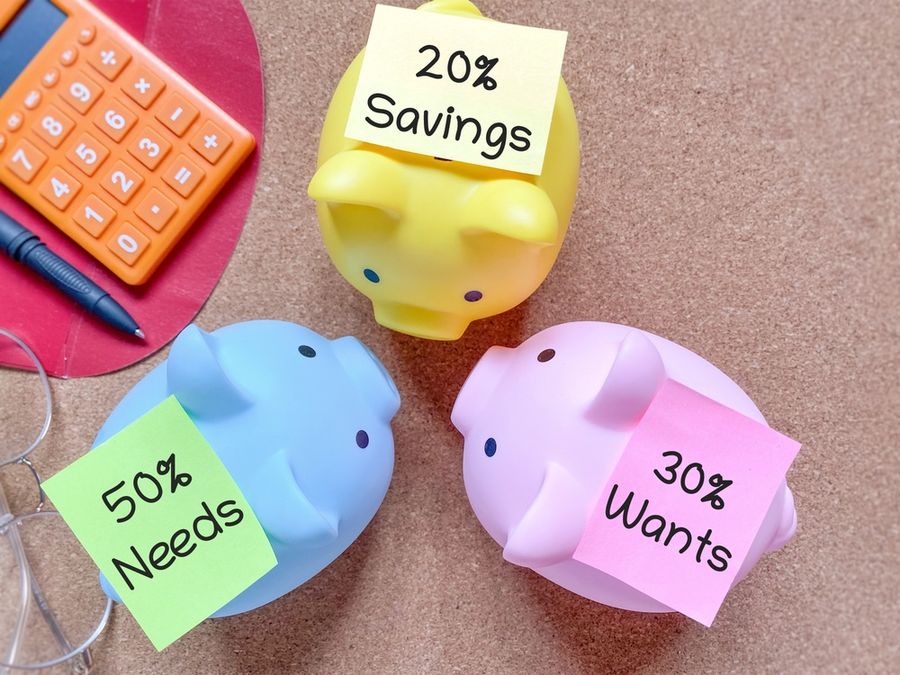
Managing money gets easier when every dollar has a general purpose, but a budget doesn’t need dozens of categories to work. The 50/30/20 method offers a simple starting point by dividing take-home pay among needs, wants, and financial goals. Better yet, the percentages aren’t rigid rules. They can be adjusted around housing costs, debt, family expenses, or other priorities while still giving your money a clear direction.
How the 50/30/20 Budget Works
The basic idea is straightforward. You divide your after-tax income into three broad categories:
- 50% for needs
- 30% for wants
- 20% for savings and debt repayment
For example, if you bring home $4,000 per month, the traditional breakdown would give you $2,000 for needs, $1,200 for wants, and $800 for financial goals.
Those percentages create boundaries without requiring you to track every coffee, grocery item, or household purchase separately. Instead of managing a long list of tiny spending categories, you can focus on whether your overall spending fits within three larger buckets. That simplicity is one reason the method appeals to people who want structure without turning budgeting into a daily chore.
What Belongs in the 50% Needs Category
Needs are expenses you generally can’t avoid without affecting your basic health, safety, housing, or ability to work. Rent or mortgage payments, utilities, groceries, insurance, transportation, minimum debt payments, basic childcare, and necessary medical costs usually belong here. The key word is necessary. A bill isn’t automatically a need just because you pay it every month.
Distinguishing needs from wants can sometimes get tricky. Internet service may be essential if you work from home, while the fastest available plan might be an upgrade rather than a necessity. A car payment could be a need if transportation is required for work, but choosing a luxury model adds discretionary spending. Looking at expenses honestly helps make the 50% target much more useful.
What Counts Toward the 30% for Wants
The wants category covers spending that makes life more enjoyable but isn’t essential for day-to-day survival. Restaurant meals, streaming services, vacations, hobbies, entertainment, clothing beyond basic necessities, beauty treatments, upgraded electronics, and recreational shopping can all fall into the 30% portion of your budget.
Wants aren’t bad spending. In fact, leaving room for enjoyment can make a budget easier to maintain over time. Problems usually arise when discretionary purchases quietly crowd out savings or important bills. Keeping wants within a general limit lets you spend without feeling guilty while still protecting bigger priorities. If one month includes an expensive concert or weekend trip, you might simply spend less on restaurants or shopping to keep the overall category in balance.
Where the 20% Financial Goals Category Goes
The final 20% is dedicated to strengthening your financial future. That can include building an emergency fund, contributing to retirement accounts, saving toward a home, investing, or paying more than the required minimum on debt. Rather than treating savings as whatever happens to remain at the end of the month, the 50/30/20 approach gives financial goals their own planned share.
Your priorities within that 20% may change over time. Someone without emergency savings might focus heavily on building a cash cushion first. A person carrying high-interest credit card debt could direct more money toward repayment. Once those needs are handled, retirement contributions or other long-term goals may take priority. The category stays the same even as your financial focus changes.
Why the Percentages Don’t Have to Be Exact
The biggest mistake people make with the 50/30/20 budget is assuming they’ve failed if their spending doesn’t match the percentages perfectly. Housing costs alone can make the traditional split difficult in expensive cities. Parents may have unusually high childcare expenses, while someone aggressively paying off debt may want to save far more than 20%.
Treat 50/30/20 as a framework rather than a financial law. Your version might look like 60/20/20, 55/25/20, or even 50/20/30 if saving is a major priority. What matters is creating a sustainable balance between current obligations, enjoyable spending, and future goals. A budget designed around your actual life will usually work better than forcing your finances into percentages that simply aren’t realistic.
How to Build Your Own 50/30/20 Budget
Start with your monthly take-home pay, meaning the amount that actually reaches your bank account after taxes and payroll deductions. Next, review your recent spending and place each expense into needs, wants, or financial goals. Looking at two or three months of transactions can give you a more accurate picture than relying on memory.
Once you know your current percentages, compare them with the 50/30/20 starting point. You may find that wants are taking up more than expected or that essential expenses leave little room for saving. Rather than changing everything at once, focus on the category with the biggest gap. Canceling unused subscriptions, renegotiating bills, adjusting restaurant spending, or automatically transferring part of each paycheck to savings can gradually move the numbers in a better direction.
Make the Budget Serve Your Priorities
A useful budget should help you make decisions, not make you feel restricted every time you spend money. The 50/30/20 method works best when you use its three categories as guardrails and adjust them as your income, expenses, and goals change.
Check your percentages periodically, especially after a raise, move, major purchase, or change in household expenses. Your ideal split may look different a year from now, and that’s perfectly reasonable. The goal isn’t to hit three numbers perfectly. It’s to create enough structure that today’s spending doesn’t keep getting in the way of tomorrow’s plans.